THE RACE IS LONG BUT THE REWARD IS IN THE JOURNEY
May 18, 2026 | Mind your ability! | No Comments
Living with Limb-Girdle Muscular Dystrophy (LGMD) is a lot like running a long-distance marathon. In both cases, you need to build endurance through exercise without overdoing it, and mental resilience plays a major role in determining success. Pacing yourself and managing your energy levels are essential strategies, and the right nutrition and proper hydration provide the fuel needed to tackle everyday tasks.
For me, physiotherapy has been my exercise of choice for more than sixteen years.
Both marathon running and life with LGMD require adequate recovery time to prevent exhaustion and reduce the risk of injury. Those of us who are veterans in this journey know that after your diagnosis — which is often a deeply traumatic moment — life becomes a series of adjustments, decisions, and recalibrations that unfold over many decades. The goalposts shift every few years, and you have no choice but to adapt if you want to keep living your best life.
My journey with LGMD began in 1997, and nearly three decades later, independence remains the driving force behind almost every decision I make. In 2025, that goal led me to search for a new power chair with the help of Chris Booysen from Wheelchairs on the Run. After six reliable years with my Invacare Stream power chair, the decision was not an easy one.
At first glance, it might seem like a simple equipment upgrade. In reality, however, it tests your resolve, your ability to plan, and your capacity to manage and communicate your own movement and equipment needs. It also tests your patience and resilience when things don’t go according to plan — and inevitably, sometimes they won’t. Without strong relationships with service providers, the constant balancing act between living with a progressive neuromuscular condition and living your best life would be nearly impossible.
LGMD gradually weakens the muscles closest to the body’s core — the hips, thighs, and shoulders. While someone with LGMD initially retains some mobility, simple activities such as walking across a parking lot, navigating a shopping centre, or standing in a queue quickly become energy calculations. Every outing carries an energy cost that will need to be repaid later.
These calculations become even more important once mobility is lost and a wheelchair becomes a permanent necessity. When people reach the power-chair stage, it’s easy to fall into the trap of thinking the wheelchair completely takes away independence. In reality it enhances and protects it.
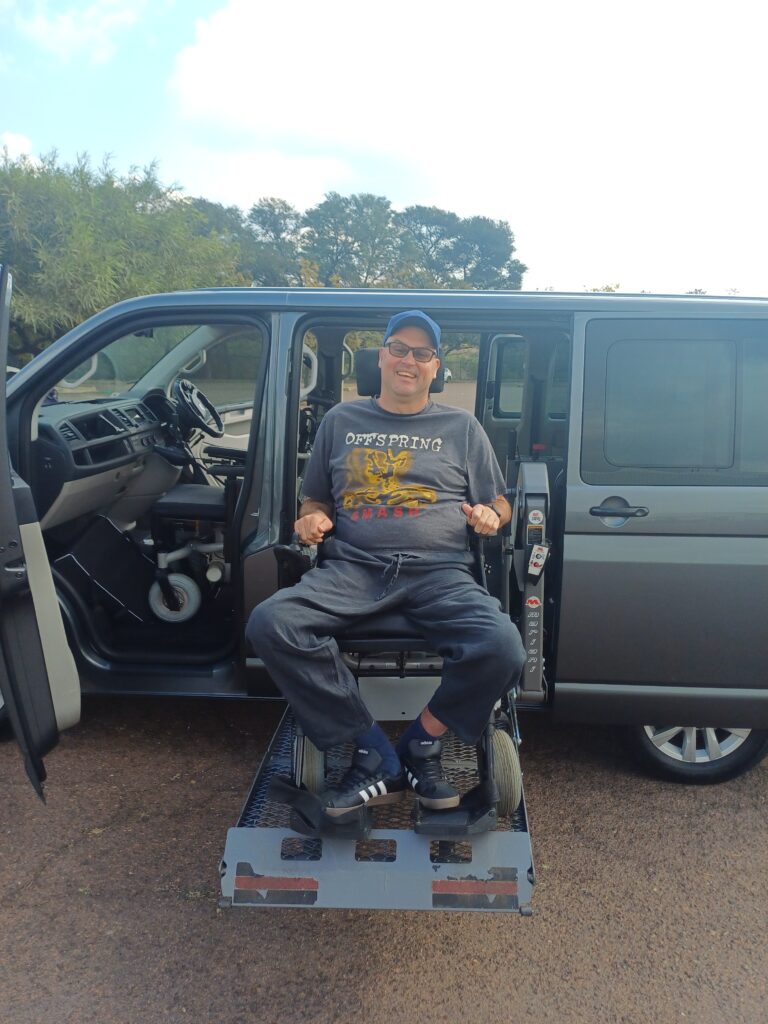
To this day, I still use a manual chair inside my home. For the past seven years, however, I have relied on the Invacare Stream power chair for appointments, travel, and social outings. The reason is simple. A manual chair gives me valuable exercise in a controlled environment, and every transfer in my home has been perfected over time to the millimetre. Without my manual chair, I would need a full-time caregiver at home. Without my power chair, I wouldn’t be able to go anywhere. It really is that simple. I have recently employed caregiver services at home that can stretch me, assist when things go wrong and when I travel I intend to use their services full-time for a week or two.
Both my manual chair and my power chair have become part of how I exist in the world.
But here is something many people don’t fully understand: when your mobility depends entirely on a machine, reliability is not optional. Even with caregivers assisting you, if a chair breaks down it is not merely an inconvenience. It is a shutdown of your independence and your daily life.
Over time, the reality became clear: relying on only one power chair was a risk I could no longer justify. Repairs take time, and replacement parts are not always immediately available. Life doesn’t pause while you wait.
That realization led to the decision in 2025 to buy a second Engulum Power Chair as a backup. This wasn’t luxury spending; it was risk management. It was the mobility equivalent of having a generator during power outages — something you hope you never need but absolutely must have. The peace of mind alone changed how I viewed my situation.
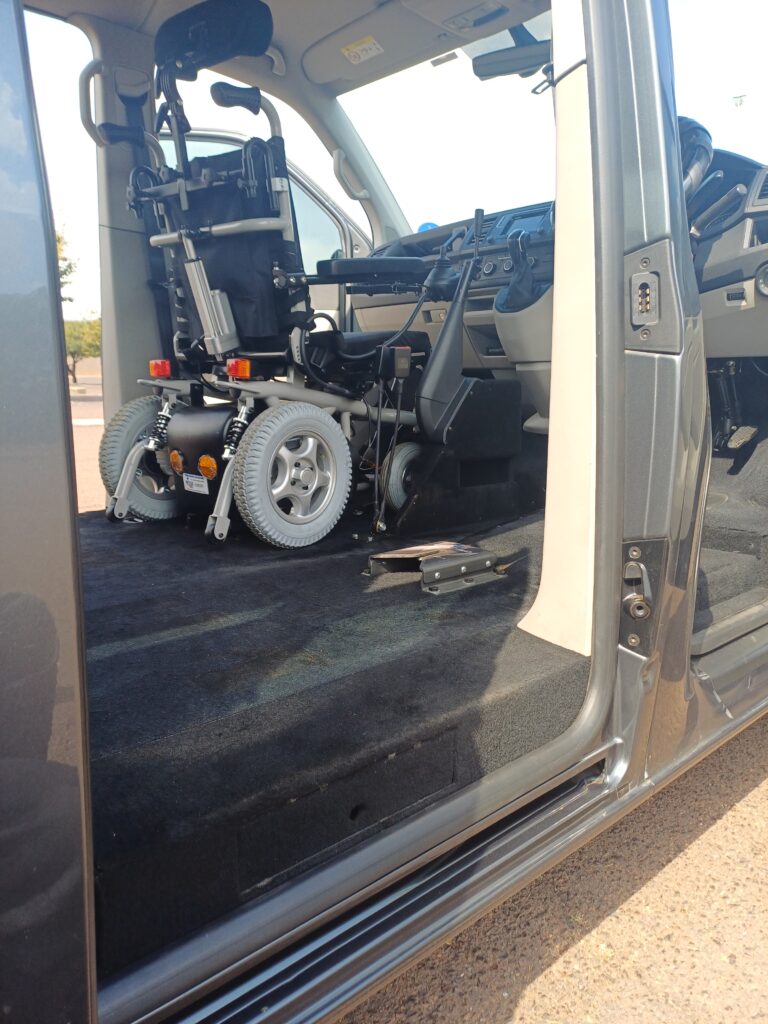
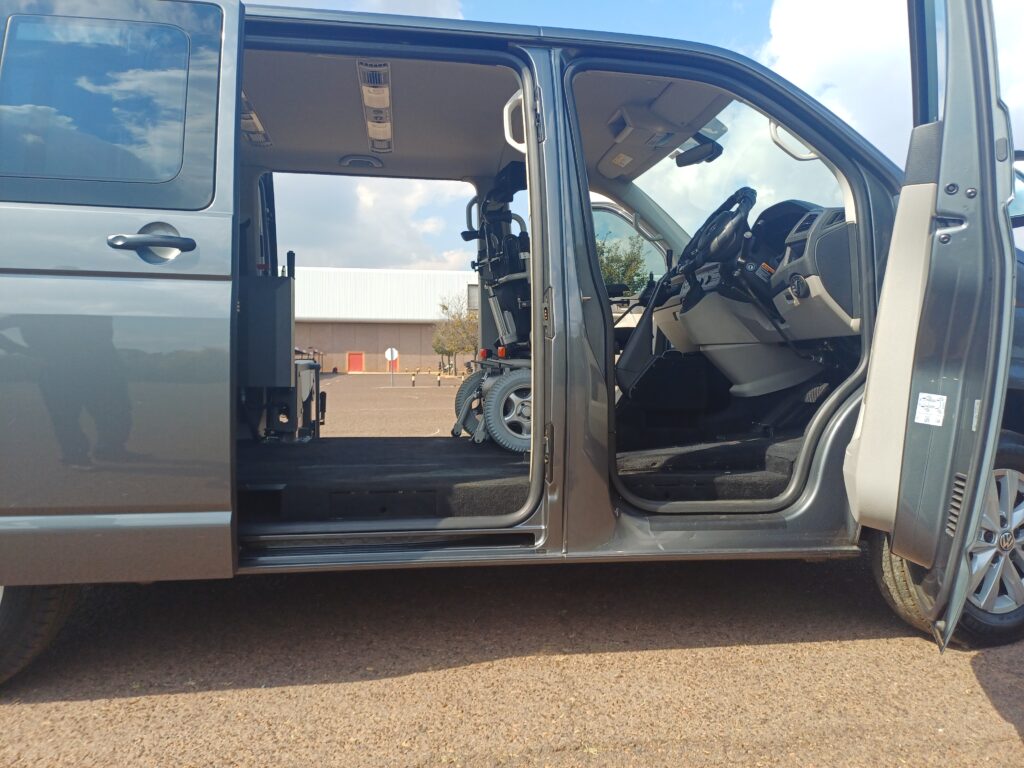
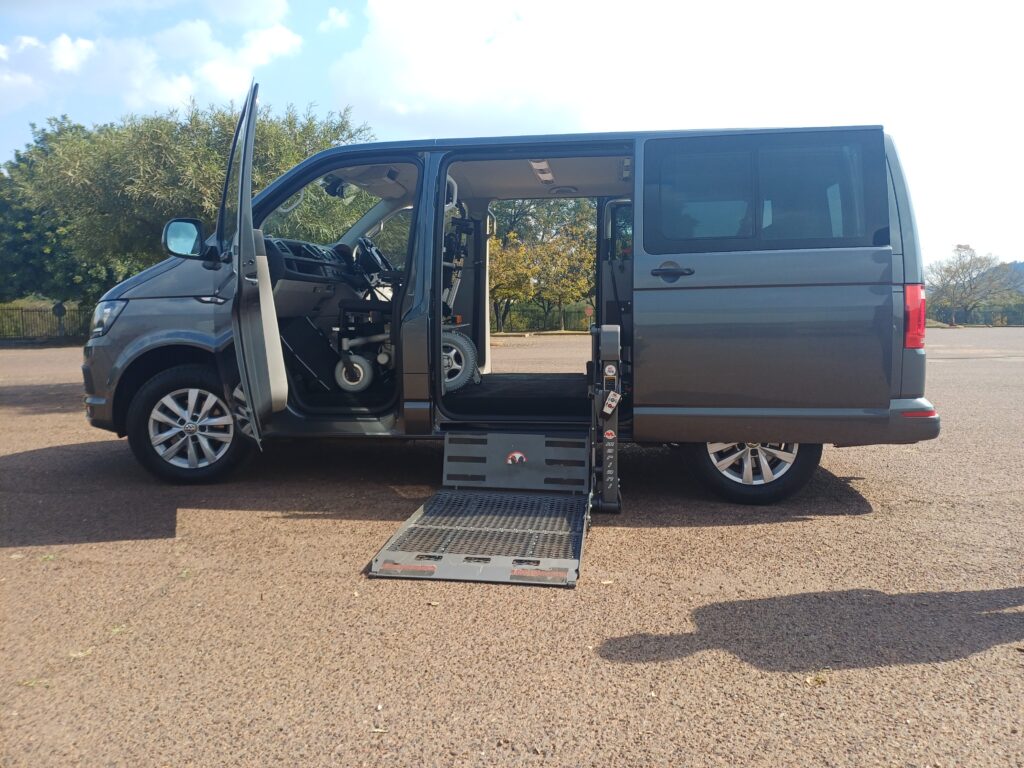
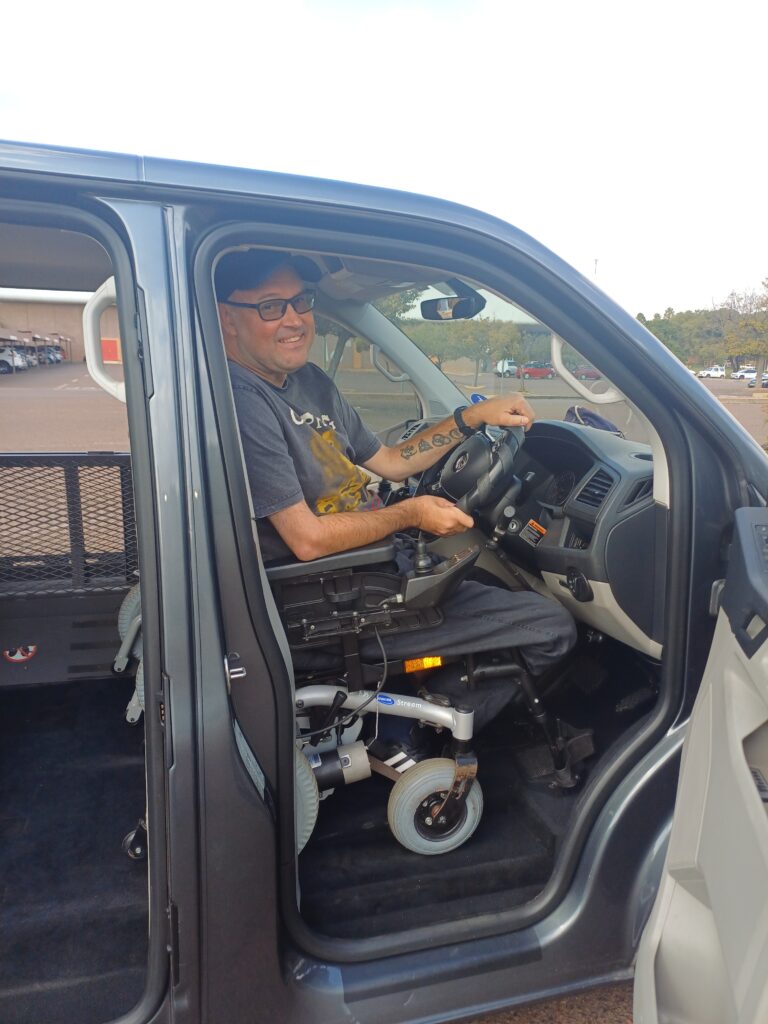
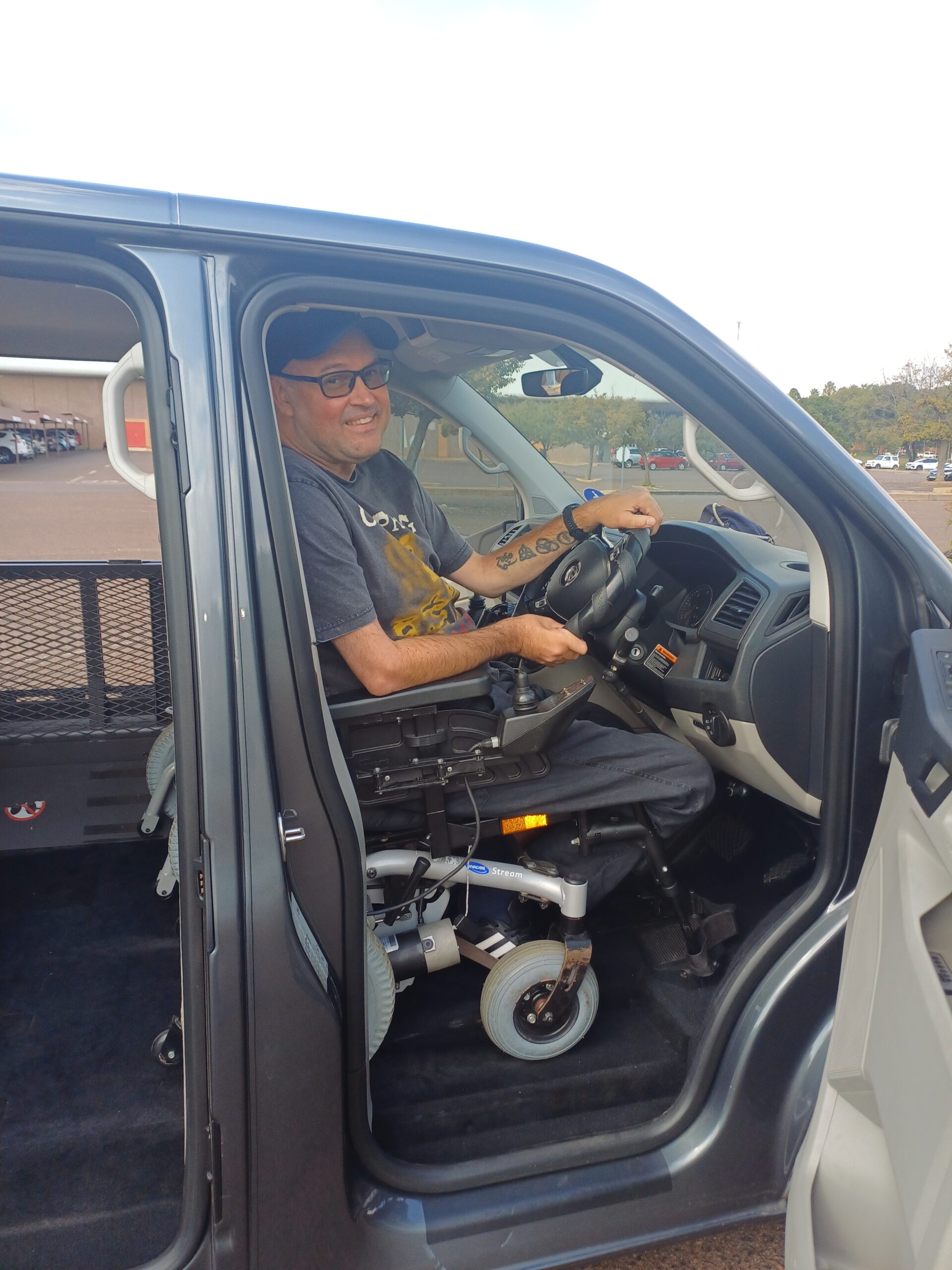
I drive a VW T6 Diesel Kombi fitted with a Mariani lift, and up to a few months ago I had one docking station. This vehicle serves as my bridge between my mobility equipment and the outside world. The lift handles the physical transfer of the chair into the vehicle, while the docking station locks the chair securely in place so that I can drive safely. It is a finely tuned system built around one specific chair — which is where the next challenge began.
Owning a second chair sounds straightforward until you try integrating it into a vehicle setup designed around a single docking mechanism. Docking stations are not plug-and-play accessories. They must align precisely with the chair’s mounting hardware and the vehicle’s safety systems. Space inside the vehicle is limited, especially once lift clearance and safe manoeuvring angles are considered. Every modification affects something else. For that reason, the size and height of the power chair had to be the first priority. Only after those factors were confirmed could we begin comparing additional features and specifications.
However, another turning point in this chapter of my life wasn’t mechanical at all. I met a friend who taught me independence does not always mean doing everything alone. Ironically, she also finds it difficult to accept help herself sometimes.
Fatigue, however, remained one of the quiet thieves of LGMD. It rarely announces itself dramatically; it builds gradually. Muscles that already work harder than they should eventually say, “Ok, Compadre, that’s enough for today. Time to rest.” Driving, even with adapted controls, requires energy and concentration, and I have always structured my life around managing that energy carefully.
I brainstormed solutions with Etienne van Tonder from EZ-Drive, and together we decided to install a second docking station. This required navigating technical, financial, and spatial hurdles in order to create a flexible system.
My friends and family can now assist me with driving when my fatigue levels rise, allowing us to stay out longer, travel further, and reduce the physical toll on my body. It was a shift in mindset. Accepting help is not losing independence — it is extending it. It becomes teamwork against a condition that never clocks out.
And this is where the logistics of disability can become exhausting. Assessments, installers, technical specifications, compatibility checks, and costs — every adjustment requires time, coordination, and resources. Yet every improvement unlocks something valuable: more energy, more mobility, and ultimately, more life.
Living with LGMD for nearly thirty years has taught me that independence is not a fixed achievement. It is a moving target. What works one year may no longer work the next. Muscles change. Needs evolve. Equipment ages — and so do we. The only option is to adapt again and again.
The second Engulum chair represents preparedness. The vehicle modifications represent problem-solving. The involvement of my service providers represents partnership. Together, they represent something much bigger: the refusal to let a diagnosis determine the size of my world.
Mobility is not simply about getting from point A to point B. It is about dignity. It is about being able to say yes to life without the fear that a mechanical failure or a fatigue crash will suddenly trap you. It is about building systems that support you when your body cannot.
After nearly three decades with LGMD, I have learned this: independence is not the absence of help. It is having the right tools, the right planning, and the right people around you so that life keeps moving — wheels, lifts, docking stations, and all.
As long as I can keep adapting, the journey continues.
I have been a member of the Muscular Dystrophy Foundation of South Africa for almost a decade, and I would like to thank them and the service providers from the bottom of my heart for their financial, emotional and technical assistance during this journey.